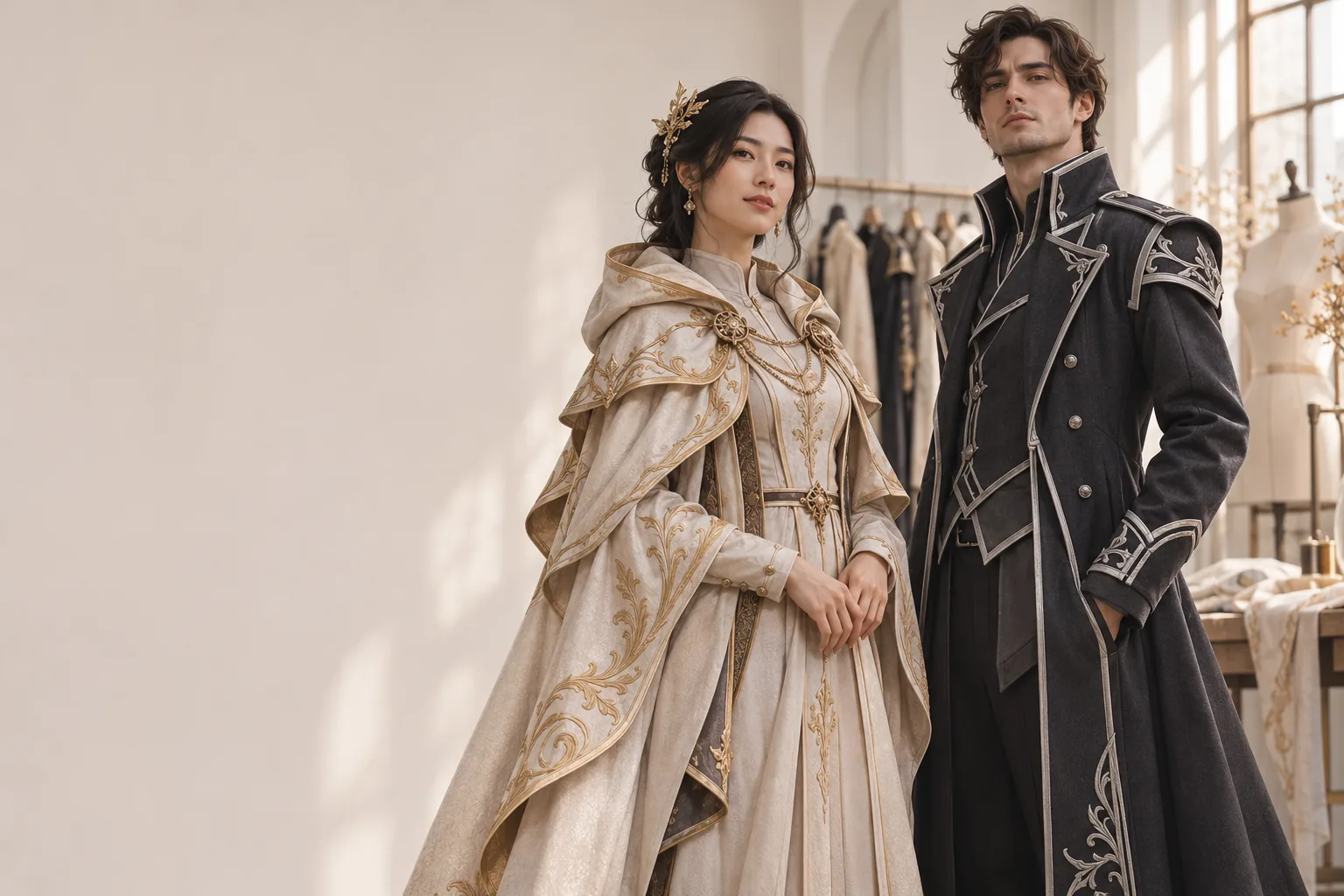
Agree on the costume version
Start with the exact character and outfit version, then collect clear front, back and detail references. Mark which layers, shoes and accessories you expect. A drawing can hide a fastening or leave the back of a garment unspecified. Ask the maker to confirm these details before measuring. Record the event date as a planning requirement, rather than assuming that placing an order guarantees arrival.
Measure the body consistently
Use a flexible measuring tape and stand naturally. Wear the underlayers you expect to use with the costume. Ask another person to help with shoulders, sleeves and back measurements when possible. Record height, chest or bust, waist and hips, plus the maker’s requested lengths. Keep the tape level and comfortably in contact with the body. Write the unit beside every value and repeat uncertain measurements.
Separate body size from garment size
Ask whether the form requests body measurements or finished garment measurements. They are not interchangeable. A flat garment width may need a different interpretation from a circumference. Do not add extra centimetres to every body measurement without agreement: the maker may already allow wearing ease. Describe the desired fit separately, including a loose silhouette, fitted waist, bulky underlayers or padding.
Plan for movement and dressing
Explain how you will wear the outfit: walking around a convention, sitting for long periods, posing or performing. Identify movements that matter, such as raising your arms or bending your knees. Ask where the closures are and whether dressing requires assistance. For layered outfits, confirm that sleeves, gloves and footwear can be worn together and that essential components can be removed when needed.
Confirm the order in writing
Before approval, request a clear list of included pieces, material descriptions, chosen colours and agreed measurements. Clarify which details are custom and which follow a standard size chart. Ask how alterations, measurement changes and order cancellation are handled. Discuss production and shipping separately, including destination and event date, and obtain a written estimate rather than treating an estimate as a guarantee.
Keep an approval record
Save the final measurement sheet, dated references and the maker’s confirmation in one place. Check decimal points and units before replying. If a fitting photo is useful, share only what is needed through a private channel; a face or unrelated personal information usually adds nothing to a measurement discussion. When the costume arrives, compare it with the approved specification and document any discrepancy before altering it.
Join the conversation
Be the first to share a useful detail or ask a question.
Share your experience